


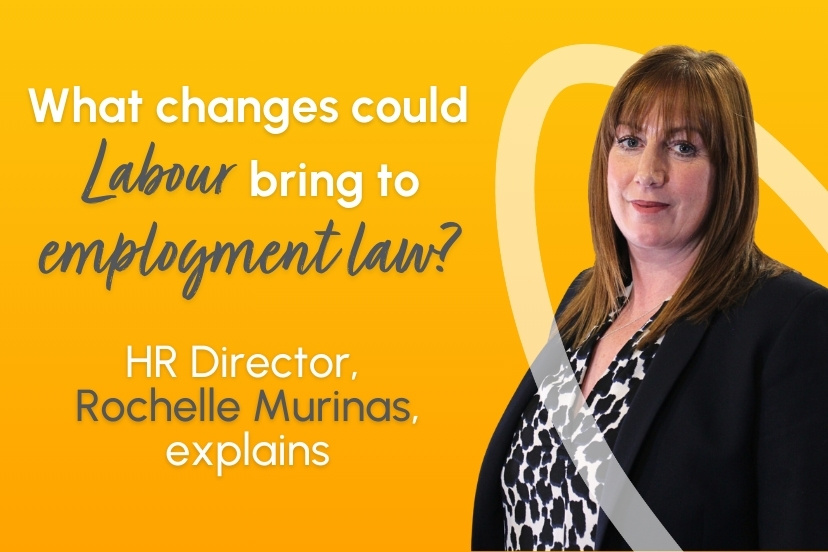
Following the General Election on 4th July, Labour are now proposing to make significant changes to employment law. They have e stated in their manifesto that their aim is to increase wages, make work more secure and help the UK to thrive.
Labour has promised to introduce legislation, and whilst tribunals are not in the Manifesto, these could be brought in at a later date.
They also promise to consult fully with businesses, workers and society on how to put plans into practice before new employment legislation is passed.
We’ve asked Rochelle Murinas, HR Director, to highlight the key changes that will be coming into effect.
Over to Rochelle
The Labour government’s ambitious proposals for reforming employment law promise to reshape the landscape of workers’ rights in the UK. These changes, also outlined in the King’s Speech, signify a shift towards greater protection and equality for all workers.
Below I’ve outlined the key elements of Labour’s employment law changes and their potential implications for businesses.
Introducing a two-tier employment status system
One of Labour’s most transformative proposals is the introduction of a two-tier system for identifying employment status.
This would simplify the current three-tier system—employees, workers, and the self-employed—into a single ‘worker’ status, except for those who are genuinely self-employed.
Under this new system, all individuals, regardless of sector, contract, or wage, would receive the same rights and protections, including sick pay, parental leave, unfair dismissal protections, and holiday pay.
For employers, this change will mean significant adjustments. The costs of compliance will increase as statutory entitlements are extended to all workers. Employment tribunals may see more claims for delayed or underpaid statutory entitlements, especially as many employment rights are intended to be enforceable from day one of employment.
Introduction of ‘Day One’ rights
Labour’s proposal to introduce day-one rights, meaning they are available from the person’s first day in the role, represents a significant shift in employment protections. Proposals for the “New Deal for Working People” include:
Unfair Dismissal
Currently employees are only able to bring a claim of unfair dismissal after two years of continuous service. Under the new planned legislation, the right to claim unfair dismissal would become immediate.
Statutory Sick Pay (SSP)
SSP will be available from the first day of sickness, eliminating the current three-day waiting period. This change is expected to be implemented by April 2025.
Parental Leave and Pay
Parental leave will be available from day one of employment. The full extent of this right, including other family-friendly rights, remains to be clarified.
Flexible Working
Labour intends to change flexible working legislation requiring employers to accommodate this as far as is reasonable.
Ban on zero-hour contracts
Labour plans to ban exploitative zero-hour contracts, seeking to end the perceived one-sided flexibility that often forces employees into unpredictable and insecure working patterns. While not all zero-hour contracts will be banned, the criteria for what constitutes ‘exploitative’ are not yet clear. This change will particularly impact industries like care, delivery, and hospitality, where zero-hour contracts are prevalent. Employers will need to consider alternative staffing solutions, such as hiring agency staff or using fixed-term contracts, to ensure business continuity.
Ending ‘Fire and Rehire’ practices
The practice of ‘fire and rehire,’ where employers dismiss employees and offer to re-engage them on less favourable terms, will be heavily restricted.
Labour’s approach mandates that such practices should be a last resort, with an emphasis on continuing consultation and seeking agreement with employees.
Equality and Apprenticeship reforms
The Equality (Race and Disability) Bill mandates pay equity audits for large employers to address racial pay disparities and requires inclusive workplace policies promoting diversity and equality. Additionally, reforms to the Apprenticeship Levy will focus on maximising benefits and developing comprehensive training programs aligned with new regulations.
Additional provisions in the King’s speech
There were also significant updates from the recent King’s Speech delivered by King Charles III on 17 July 2024 which includes:
Protection for New Mothers
Making it unlawful to dismiss a woman for the following six months after returning from maternity leave, except in specific circumstances” which have not yet been defined.
Establishment of a Fair Work Agency
To enforce workplace rights and introduce Fair Pay Agreements
Introducing the Fair Pay Agreement in the adult social care sector.
Repeal of Minimum Service Levels
In relation to industrial action, aiming to restore greater bargaining power to unions.
Union Access Rights
Introducing a right for workers and union members to have access to a union within workplaces.
Here to help
So, that’s what we know so far about Labour’s proposed changes, which aim to bring a substantial shift towards fairer work conditions and enhanced employment rights.
While the timeline for implementation and prioritisation of these proposals remains uncertain, it’s important that you are aware of the potential impact on your business.
With the potential increase in statutory entitlements, combined with stricter regulations on employment practices, we are here to help. If you’d like to speak to our HR team about Labour’s planned changes to employment law, simply fill out the form below and we’ll be in touch.