



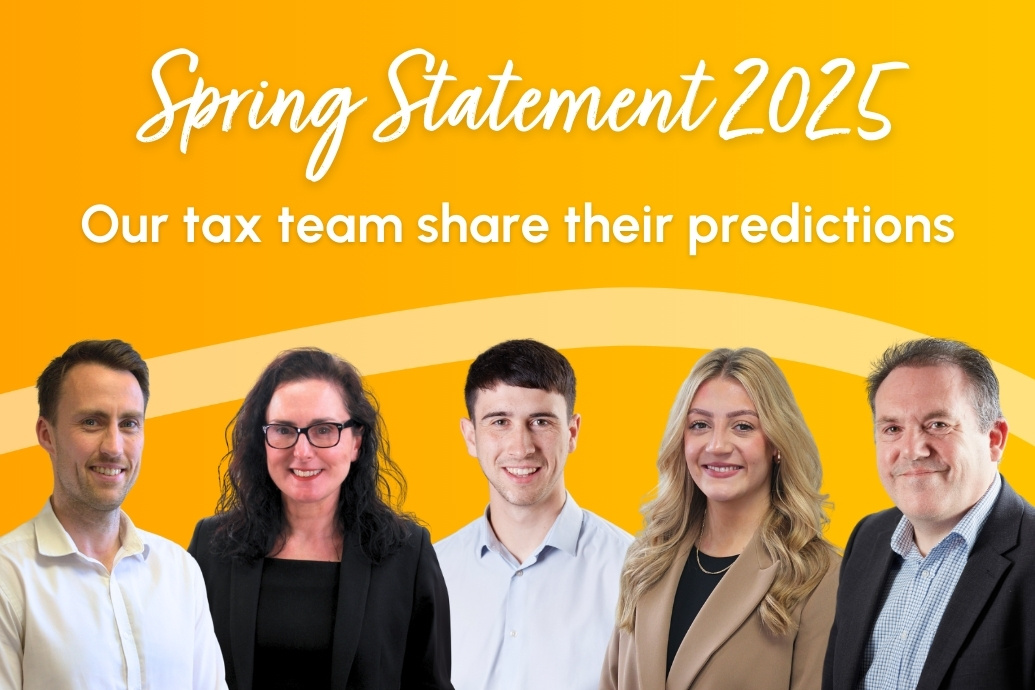
With the Spring Statement just around the corner, businesses and taxpayers across the UK are wondering what Chancellor Rachel Reeves might have in store. Following the significant changes announced in the Autumn Budget of 2024, many are hoping for a relatively quiet statement – though our experts suggest there could still be some important developments to watch for.
A Lower-Key Event?
Our expert team believe that the Spring Statement is unlikely to match the Autumn Budget in terms of major fiscal announcements. As Helen Cowley, Tax Director at our Bury office points out, “Following the major announcements made at the Autumn Budget, and Rachel Reeves’ stated commitment of one major fiscal event a year, the Spring Statement is unlikely to be eventful, although further tax increases cannot be ruled out.”
Jess Spencer, Tax Senior at our Manchester office, agrees, suggesting that “advisors, investors, business-owners and ordinary taxpayers alike are hoping for a fairly uneventful Spring Statement following the multitude of reforms unpacked during the Autumn Budget announcement in October 2024.”
Potential Areas for Change
Despite expectations of a less dramatic event, our experts have identified several key areas where changes might be introduced:
- Cash ISAs Under Scrutiny
One consistent theme across our expert predictions is potential reforms to Cash ISAs. Josh Draycott, Tax Manager at our Stoke office, notes the possibility of “a reduction in the annual tax-free allowance for Cash ISAs,” which could “impact the method in which people continue to save/invest.”
Matt Verling, Tax Manager at our Nantwich office, similarly predicts the government might consider “reducing the Cash ISA annual limit to tempt investment into stocks and shares,” while Mark Morris, Senior Tax Manager at our Stoke office, observes there is “significant speculation about Cash ISAs, with some parties perceiving that money is being saved away tax and risk free rather than being invested.”
- Business Property Relief (BPR) and Agricultural Property Relief (APR)
The Autumn Budget’s introduction of a £1 million cap on BPR and APR for Inheritance Tax purposes caused considerable concern. Several of our experts suggest the Spring Statement might include refinements to these controversial measures.
Matt Verling predicts we could see “the new £1 million BPR/APR limit to be made transferrable between spouses” and potentially “transferrable from spouses who died before the rule changes, as the current proposed changes unfairly target widowed, elderly and/or sick individuals.”
Helen Cowley hopes “the Spring Statement could give Reeves the chance to soften the blow to farmers and business owners who plan to pass on the business to the next generation, by increasing the £1 million limit on agricultural property and business property relief.”
- Dividend Tax Alignment
Helen also highlights that “it’s been speculated that the Chancellor could align tax rates on dividends with salary. The gap between the two has narrowed gradually over recent years, and perhaps now might be the time for it to be closed completely.”
- National Insurance Considerations
Mark Morris suggests that while the rise in employers’ National Insurance “has received a lot of negative attention,” a rate cut seems unlikely. Instead, “the Chancellor could consider something more targeted, such as an increase in the Employment Allowance or relief for specific sectors, such as charity/hospitality, to provide a boost to employers.”
- Focus on Public Spending?
Rather than introducing further tax changes, several experts believe the Spring Statement might concentrate more on public spending cuts.
Josh Draycott mentions potential “budgetary cuts and a potential reform to the welfare system,” while Matt Verling expects the government’s focus to be on “public spending cuts rather than any major tax reforms.”
Mark Morris concurs, suggesting “it would perhaps be more likely that the Chancellor will look to cut spending rather than implement further tax changes at this point.”
- Clarification on Existing Changes
There’s also hope that the Spring Statement will provide greater clarity on previously announced measures.
Josh Draycott expects the statement will “provide some certainty of the practical implication of some of the changes announced in October. Namely the restriction of business relief and agricultural relief and the taxation of pensions.”
Looking Ahead
While the Spring Statement itself may be relatively modest, our experts warn that further changes could be on the horizon if economic conditions don’t improve.
Matt Verling cautions that “if the performance of the economy and the effectiveness of the government’s public spending cuts do not improve over the next 6 months then we may well see some further tax increases or changes in the Autumn Budget.”
As Mark Morris summarises, “it remains a difficult balancing act for the Chancellor.”
Our team of expert advisers continues to monitor these developments closely and stands ready to help you navigate any changes that may impact your business or personal finances.