

As one mad January deadline passes in tax another looms large on the horizon, and its everyone’s favourite – benefits in kind.
The current tax year ends in the 5 April 2024 and by 6 July 2024, employers who have provided employees with certain non-cash benefits must give a note of those benefits to both the employee and HM Revenue & Customs, usually using a P11d form.
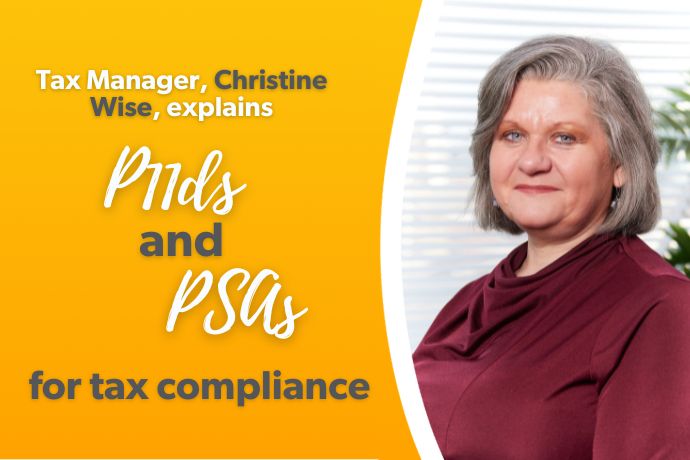
We’ve asked Christine Wise, Tax Manager, from our Manchester office to outline everything you need to know about informing HMRC of benefits in kind, and highlighting any tricky areas that you need to be aware of.
Take it away Christine
It’s firstly important to note that any non-cash remuneration must be included in a P11d unless it is specifically exempt or has been payrolled. Common examples of this include company cars, medical and dental benefits and for some, golf club memberships!
It’s no longer necessary and hasn’t been for several years to include the payment of reimbursed expenses, or professional subscriptions paid on behalf of staff.
Below I’ve summarised some tricky areas you may face when it comes to P11ds.
Tricky areas
The tricky spots often relate more to owner managers than employees. Paying a director or an employee’s personal bill can be a bit of a minefield, depending on whether the bill is in the individual or the company’s name, as a national insurance liability arises for the employee on the payment of a personal liability, and should be included in the relevant period’s payroll run for NI, but the P11D for income tax. Additionally, as the employee has effectively been given a net amount, the taxable/nicable figure must be grossed up.
Another tricky area that does affect employees are benefits that aren’t covered by an exemption but are nevertheless taxable on an employee. HMRC took many of these out of the tax net when Trivial Benefits were introduced, as they mostly effected staff entertaining and gifts. There are still a couple of areas where a tax charge might arise.
PAYE Settlements – A working example
Let’s say Great Things Events Limited throws an annual Christmas party for staff. It includes the cost of the party, overnight hotel, and transport home; the cost per head is £250 (inc of VAT) per head.
There is an exemption of £150 for staff annual events, the cost of this function exceeds this and so the full cost of £250 is chargeable on each employee who attended the event {you can’t deduct the £150}. Now, the employees might be a bit disgruntled to get a tax bill for attending the Christmas party, and Great Things Events Ltd would have to prepare a p11d for each employee. They can instead apply to HM Revenue & Customs for a PAYE Settlement Agreement or PSA.
PSAs allow employers to pay over the tax and National Insurance liability on taxable non-cash benefits that are either minor, irregular, or shared with other employees and impractical to assess. They can’t be used for company cars medical benefit or anything else provided regularly. There are also other restrictions if you apply and the tax year has already started.
The company applies for and is usually granted, by way of a contract with HM Revenue & Customs, an agreement to pay the tax and NI on the taxable value of the benefit. The contract tells HMRC the total value of the benefit, say in the case of the party for 500 people £125,000 and how many of those 500 people fall into the 20%, 40% and 45% tax bands. This is treated as a net receipt by the employees and so must be grossed up to calculate the tax due. Class 1B employers NICs are also due on the grossed-up value.
You must apply for a PSA for the 2023/24 tax year by 5 July 2024 and pay over the tax and NIC due by 19 October (22nd if paying electronically).
Here to help
If you think this might benefit your business and are looking for some guidance, we can help. To get in touch with our friendly, expert team, please fill out the form below.