

We will have a new Labour government, or a refreshed Conservative parliament, although it looks now as though even the Conservatives have given up on an outright victory. Either way, we can expect some changes – can’t we?
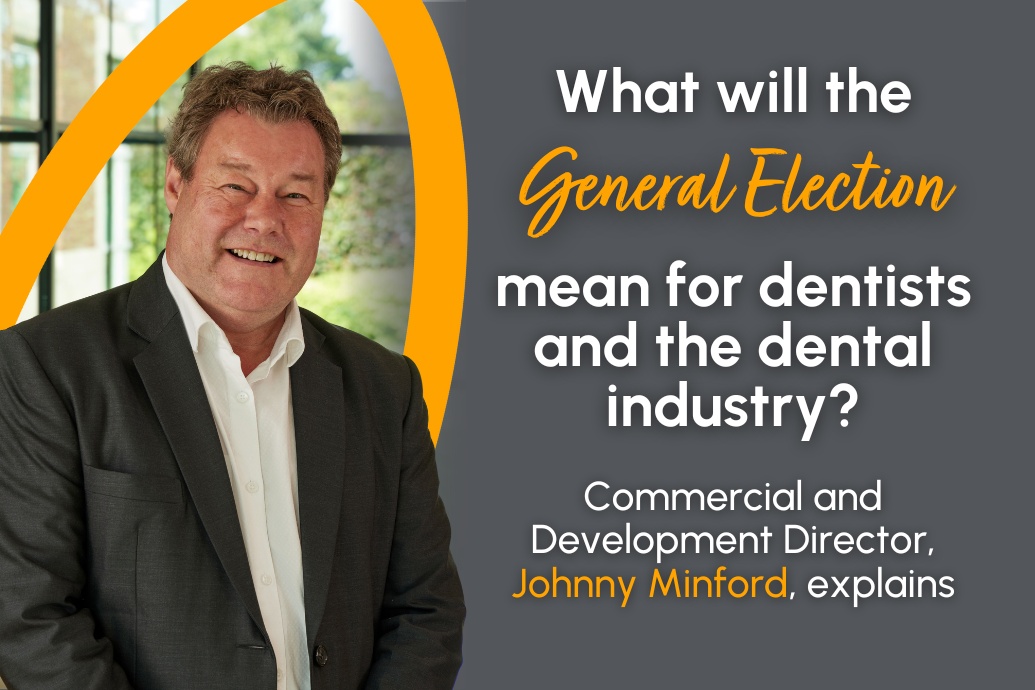
Johnny Minford, Commercial and Development Director, has shared his thoughts on what the upcoming General Election could mean for the dental industry.
What has been said so far?
Given the Labour Party’s announcements so far, a new government formed by them could have significant impact on healthcare in general. As the dental industry has been specifically mentioned more than usual, it seems that abnormally we might be slightly more than a footnote.
The Shadow Health team have been vocal in their pronouncements, and what bodes well is that this is not something which has just come to the surface in the last few weeks. Of course, policies regarding NHS funding, Contracts and practice regulation are often vague at this stage, yet to be influenced by reality, but at least we see something though the window, even if we can’t see what exactly it is. Through a glass darkly. However it’s clear that an Election outcome in Labour’s favour throws up new opportunities and challenges for dentists.
What happens in NHS Dentistry affects the whole industry. Three quarters or so of dentists in the UK still offer at least some NHS treatments, and when that is combined with the fact that there is still a public clamour for NHS access, change in NHS has an inevitable knock-on effect on the private sector. The ‘customer’ base in a wider sense is the same.
The dynamics of private dental practices
Private practices have their own loyal patients, loyal to their dentist and to the way their treatment is delivered. This level of loyalty to private treatment is based on a variety of things. It may be to the individual clinician and their advice, it could be that they only offer independent treatment. It may be to the type of treatment required, which is delivered, or better delivered, privately.
But dig deeper.
Understanding patient loyalty
Examine the concept of habit – what would it take for the patient to change their routine? The obvious one is cost. A lower price for the same treatment, at a surgery close by? A lower price at the same surgery, possibly even delivered by the same dentist? How much lower?
What if the clinicians have changed in the practice? Changes in Associates can make some patients feel a little less connected, and a little more open to an attraction from elsewhere.
What is welcoming about your practice? The décor, parking, the reception? What is unwelcoming – the décor, the parking, the reception?!
Even if a patient doesn’t change dentists, the presence of real alternatives adds factors into the operation of private dentistry. Price increases may be a little more challenging. The differentiation between private and NHS delivery may need to be a little more pronounced. There may need to be additional treatments offered, or in a different way, some of which come with additional capital costs.
Post Covid, practices have generally settled down to an equilibrium with their neighbours in a locality. Only when there is a change from outside is there an imbalance which might affect the patient attitude, such as a new owner, or an abrupt conversion. The barriers to change become lower. A substantive change in the national ability to deliver NHS dentistry following the Election falls into that category.
Final thoughts
Bear in mind a practice patient list could end up like many governments …. “Nothing particularly wrong, just time for a change”.