



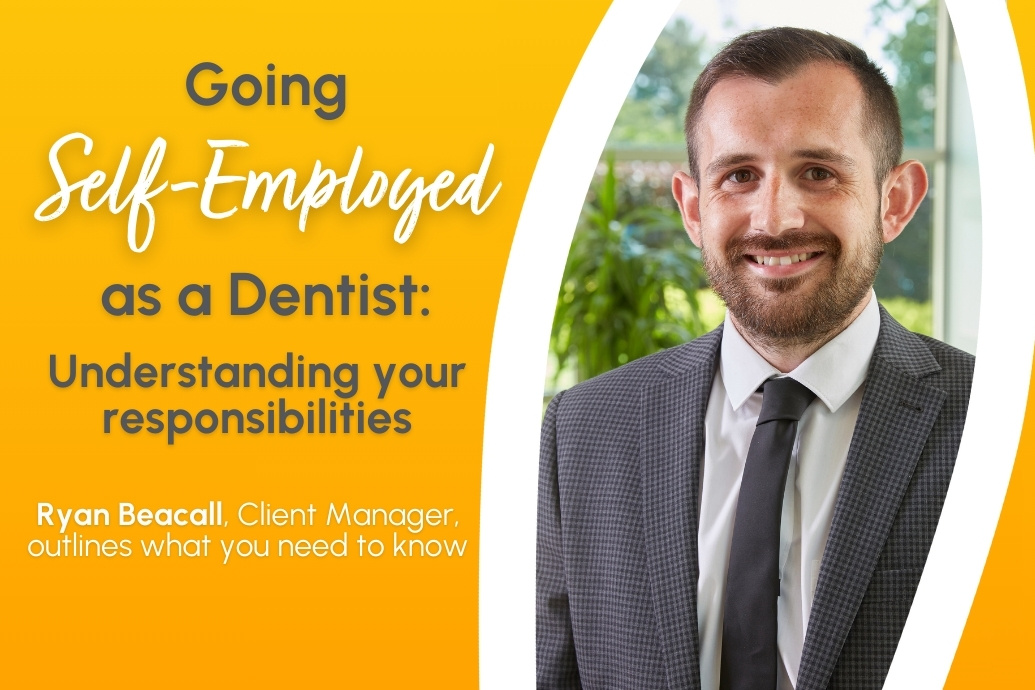
As a dentist, the decision to go self-employed can be both exciting and daunting. While it offers greater autonomy and potential financial rewards, it also comes with a set of responsibilities that you must be prepared to handle.
Ryan Beacall, Client Manager, has outlined the key responsibilities you’ll need to consider when transitioning to self-employment in the dental profession.
Take it away…
Going self-employed as a dentist in the UK is a significant step that requires careful planning and ongoing management. While the clinical aspects of dentistry remain paramount, new self-employed dentists often underestimate the time and effort required for administrative tasks.
Registration and Licensing
Before you can practice as a self-employed dentist, you must ensure that you maintain your registration with the General Dental Council (GDC). This is crucial for legally practicing dentistry in the UK. Additionally, you’ll need to obtain appropriate indemnity insurance to protect yourself and your patients
Tax Obligations
As a self-employed professional, you’re responsible for managing your own taxes. This involves registering as self-employed with HM Revenue & Customs (HMRC) and completing annual Self Assessment tax returns. You’ll need to pay Income Tax and National Insurance contributions on your earnings.
Financial Management
Effective financial management is key to success as a self-employed dentist. You’ll need to keep accurate records of your income and expenses. It’s wise to set aside money for tax payments from the first month you begin self employment to avoid surprises when your tax bill is due. Many self-employed dentists find it beneficial to hire an accountant to help manage their finances and ensure compliance with tax regulations. Don’t forget to plan for your pension and retirement if you are going into fully private practice or have opted out of the NHS pension scheme.
Continuing Professional Development (CPD)
The General Dental Council requires all dentists to engage in ongoing professional development. As a self-employed dentist, you’ll need to complete a minimum of 100 hours of CPD every five years. This involves attending courses, workshops, and conferences to stay updated with the latest developments in dentistry. It’s important to keep detailed records of your CPD activities, as you may be asked to provide evidence of your ongoing learning.
Business Structure
Most newly qualified dentist will go into self employment however it is important to consider whether this is the best option for your circumstances. In some circumstances it maybe better to start trading through a company structure. However the days of automatic tax savings by doing this are gone and you need to speak with a dental specialist accountant who understands both your industry and circumstances to see what is best for you.
Here to help
Becoming a self-employed dentist offers many rewards, but it’s crucial to understand and prepare for the responsibilities that come with it. By staying informed about your obligations and seeking professional advice when needed, you can set yourself up for a successful and fulfilling career as an independent dental professional.