



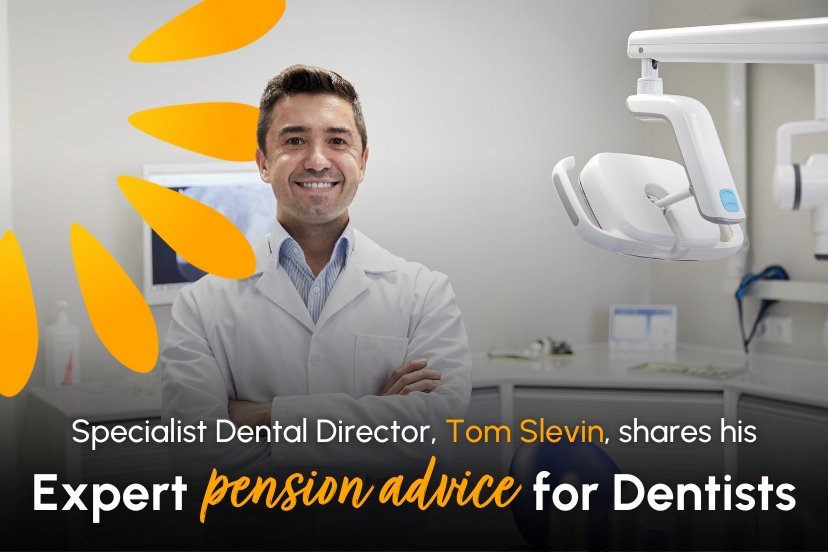
As a dentist, you face financial challenges, such as managing your practice and patients, fluctuating income, and making significant investments in equipment and facilities but planning early for your retirement is a vital step for ensure your long-term financial security.
Director, Tom Slevin, explains how with the right pension strategy in place, you can build a solid financial future and enjoy the retirement you deserve.
Why pension planning matters for Dentists
As you approach retirement, ensuring you have enough savings becomes even more important. Dentists need to take a proactive approach to building their pension.
A well-structured pension plan offers several key benefits:
- Financial Independence: A solid pension means you can retire comfortably without relying on the sale of your practice.
- Tax Efficiency: Pension contributions come with tax relief, making it one of the best ways to save for retirement.
- Flexibility: A good pension plan gives you options on how and when you can access your funds.
Key considerations for your pension plan
There are a few important factors that I would recommend you keep in mind when planning for retirement as a dentist:
1. If you are carrying out NHS treatments, consider being a member of the NHS pension scheme
The NHS pension scheme is a defined benefit pension scheme. The pension you receive on retirement is dependent on the number of years service and the pensionable earnings you have accrued over that time period. For many dentists, the NHS pension is the backbone of their retirement strategy as it pays out an annual income on retirement until the date of death
2. Start early and contribute regularly
Whether you are paying into the NHS pension or not, you should also consider whether you need to be paying into a private pension. Those dentists who are predominantly NHS may decide not to pay into a private pension, but if private work is a considerable element of your income, then paying into a private pension should be considered.
The earlier you start contributing to your pension, the more time your money has to grow while being invested. The effect of compounding on your pension pot is huge – £100 invested for 20 years achieving a growth rate of 4% will be worth £219 in 20 years time so the more you put in and the earlier you pay in, the greater impact compounding will have.
If you’re mid-career or even later, it’s never too late to increase your contributions. Regular contributions, especially in the final years of your career, can boost your pension pot.
3. Make the most of tax relief
One of the biggest advantages of contributing to a private pension is the tax relief. For every £80 you contribute, the government tops it up to £100 (at the basic rate). If you’re a higher-rate taxpayer, you can claim even more tax relief through your tax return.
Make sure you’re aware of the Annual Allowance—the maximum you can contribute each year without facing tax penalties. This is currently set at £60,000 and if you’re in the NHS pension scheme, this includes the ‘pension input’ for your NHS pension each year. Seeking advice on how to maximise these benefits is key, especially for higher earners.
4. Plan beyond your Practice sale
If you are a dental practice owner, the value you obtain on selling the practice may be one source of funding your retirement. While this can provide a substantial lump sum, market conditions and timing can impact the value of your practice. It’s essential not to rely solely on the sale of your practice. A diversified retirement savings plan, including a pension, will offer extra financial security.
5. Review and adjust your plan regularly
Your financial situation and retirement goals will evolve over time, so it’s essential to review your pension plan regularly. Adjust your contributions and investments as needed to stay on track.
An accountant, in conjunction with an Independent Financial Advisor, who specialises in pension advice for dentists can help you evaluate your current strategy. Making any necessary changes to ensure you’re maximising your tax benefits and contributions.
6. Plan for flexible retirement options
When it comes to accessing your private pension, you’ll want flexibility. UK private pensions offer various ways to draw your funds, such as:
- Drawdown: Withdraw money as needed while keeping the rest invested.
- Annuities: Receive a guaranteed income for life or for a set period.
- Lump Sum Withdrawal: Take 25% of your pension tax-free once you reach 55 (57 from 2028), up to a maximum of £268,275 if your pension is worth more than £1,073,100.
Your NHS pension will be paid out as an annual annuity but be aware of the different retirement ages in the different schemes and the impact of drawing your pension earlier than the scheme retirement age.
It’s important to plan these options well in advance to suit your retirement lifestyle.
7. Seek specialist advice
As a dentist, your financial situation is unique, so it’s important to work with experts who understand your profession. A dental accountant with experience in pension advice can help you create a retirement strategy that aligns with your career and financial goals.
We specialise in pension advice for Dentists
Building a solid financial future as a dentist starts with careful pension planning. By starting early and seeking professional advice, you can secure the financial freedom to enjoy your retirement with peace of mind.
At DJH, we specialise in helping dentists plan for retirement. Our experts can guide you through the complexities of pension planning and ensure you’re on track for a comfortable and secure future. Contact our team of specialist dental accountants to learn how we can support your pension strategy.